
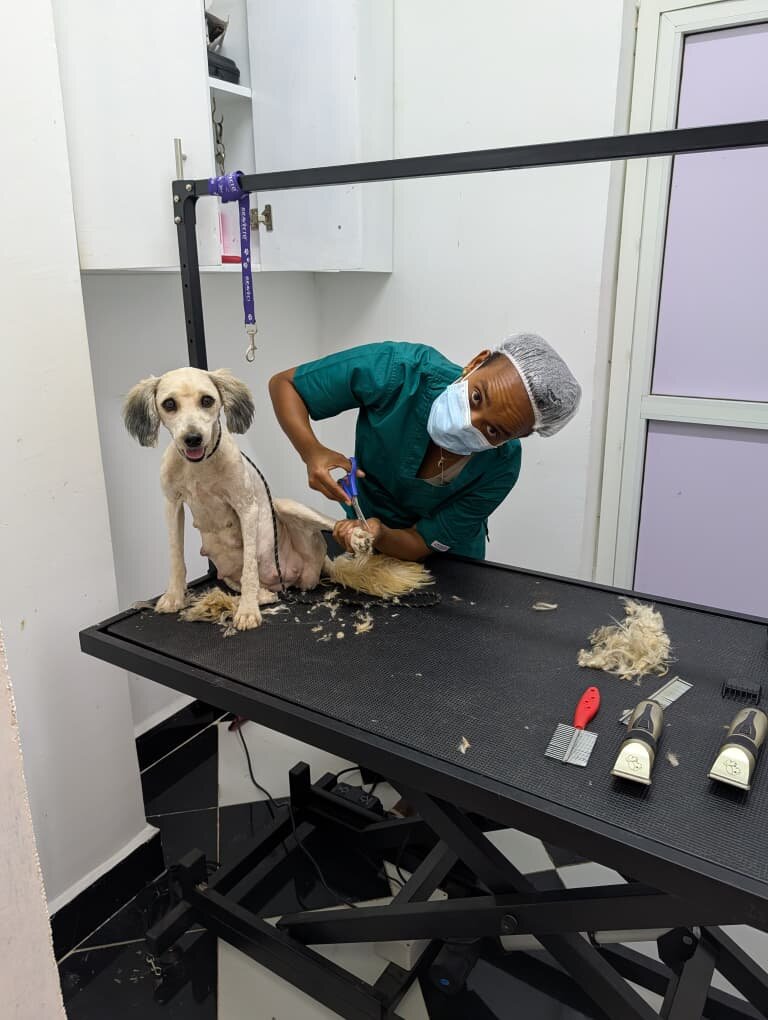
Why grooming matters in a humid climate
Tanzania’s heat and humidity make coat care more important, not less. A thick or matted coat traps moisture against the skin, creating the perfect conditions for bacterial and yeast overgrowth. Wet fur left to dry slowly, especially in skin folds, is a common trigger for recurring skin problems.
Grooming is also one of the best ways to notice changes early. While brushing, you feel lumps, scabs, ticks and areas of tenderness that you might otherwise miss. That makes grooming a health check as much as a beauty routine.
It is not about making a dog look show-ready. It is about keeping the skin clean, the coat functional and the dog comfortable.
What a proper grooming session covers
Whether you groom at home or use a professional, these are the essentials.
- A coat and skin check before bathing, looking for lumps, ticks, redness and matting.
- Brushing that reaches the skin, not just the surface, and gently removes tangles.
- Bathing with a shampoo suited to your dog’s skin — not dish soap or human shampoo.
- Thorough drying, especially under the ears, in skin folds and around the paws.
- Nail trimming at the correct length, avoiding the quick.
- Ear cleaning where appropriate, using a product made for dogs.
- A final check for parasites, hot spots or anything unusual.
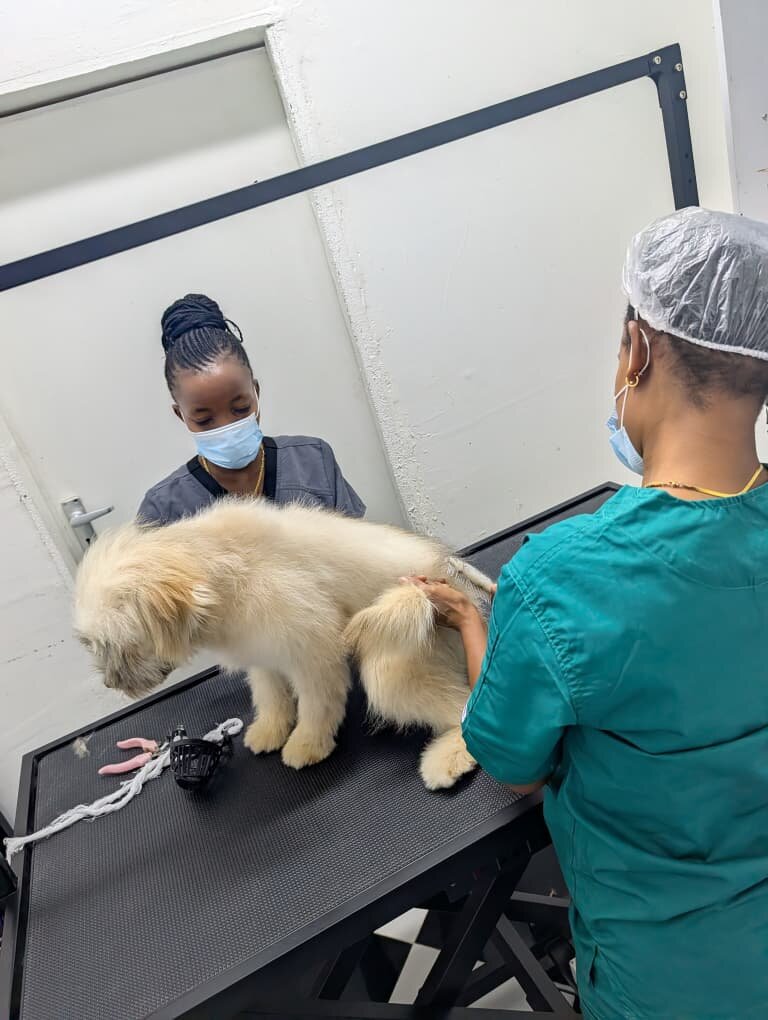
How often should you groom?
Short-coated dogs often need a bath every few weeks and a quick brush several times a week. Long or curly coats need more frequent brushing and professional grooming every four to eight weeks. Dogs that swim or walk in long grass may need more frequent checks.
Over-bathing can dry the skin and strip natural oils, so more is not always better. The right frequency depends on coat type, lifestyle and any skin condition. If your dog has a diagnosed skin disease, follow the specific advice you were given rather than a general routine.
A simple home grooming routine
Brush before bathing
Remove loose hair and tangles first. Wet mats tighten and become much harder to remove without causing pain.
Check the skin
Part the coat and look for redness, scales, scabs, fleas, ticks or lumps. Note anything that has changed since last time.
Bath with the right shampoo
Use warm water and a dog-specific shampoo. Rinse thoroughly, because leftover product can irritate the skin.
Dry completely
Towel dry, then use a low-heat dryer where needed. Never leave a thick-coated dog damp, especially in humid weather.
Finish the feet, nails and ears
Check between the toes, trim nails if you are confident, and clean ears only with a suitable product. Ask us if you are unsure.
When grooming reveals a problem
Some findings need more than a bath: persistent scratching, red or smelly skin, hair loss, recurrent ear infections, weeping hot spots, lumps or a sudden change in coat quality. These can signal parasites, allergy, infection or hormonal disease.
Do not apply human creams, oils or leftover treatments. They can trap heat, soften the skin or be licked off, and they often make diagnosis harder. Book a consultation so we can examine the skin and test if needed.
If your dog hates grooming, do not force it. Pain, fear and a bad experience can all cause resistance. We can help you build a gradual, reward-based routine or advise on professional handling.
Choosing a groomer
Ask whether the groomer has experience with your dog’s coat type, how they handle anxious dogs, and whether they check for skin and ear problems. A good groomer will tell you about anything unusual rather than simply finishing the clip.
For pets across Tanzania, grooming is often part of a wider care routine. If you are unsure how often to book or what to ask for, speak to our team and we will help you plan around your dog’s coat and lifestyle.