
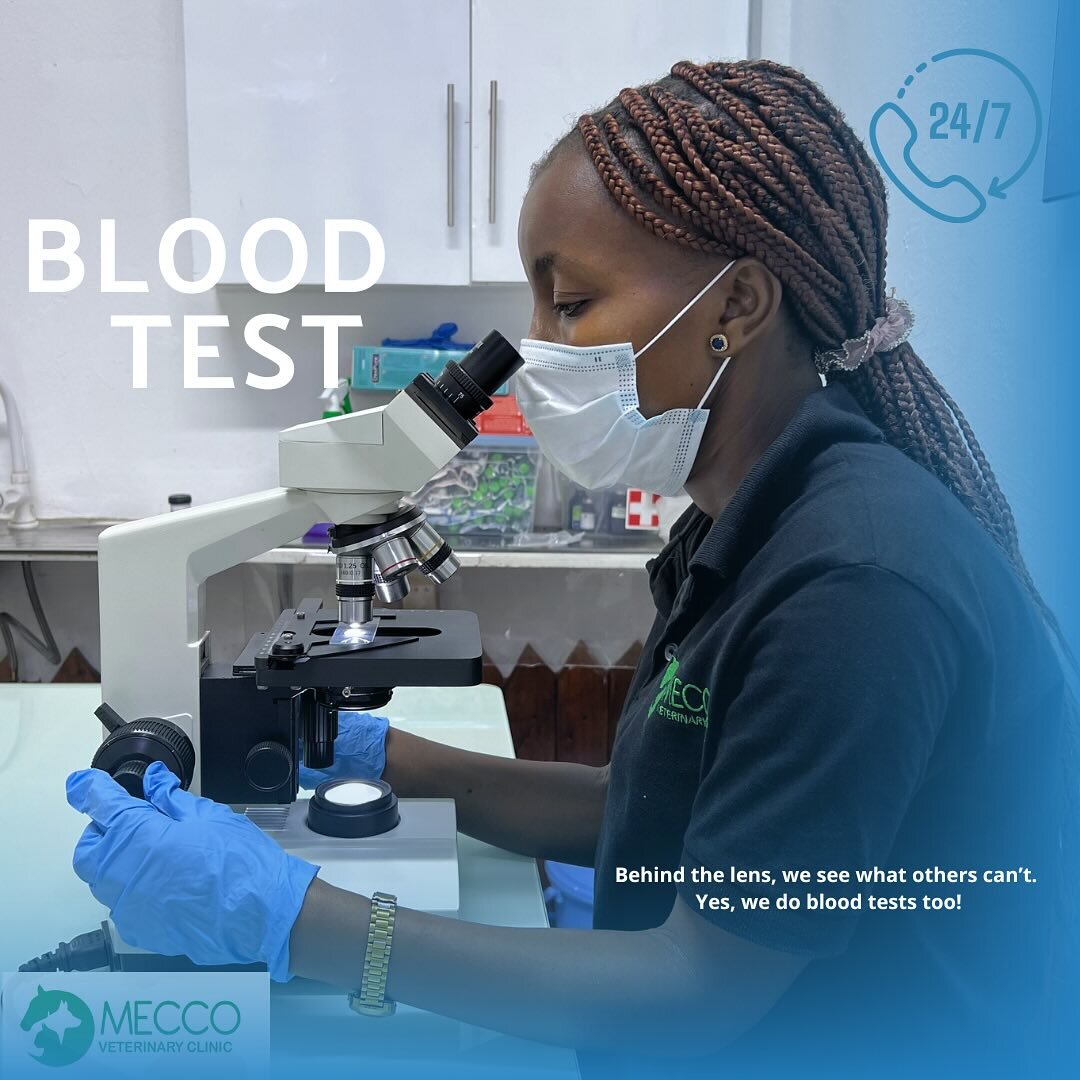
Why we test rather than guess
Many illnesses look alike from the outside. A pet that is tired and not eating could be suffering from kidney disease, an infection, dehydration, anaemia or something else entirely — and the treatment for each is different. Laboratory testing lets us see what is happening inside the body and choose the right course with confidence.
Testing is not an end in itself. It answers specific questions, rules out possibilities and, just as importantly, gives us a baseline against which we can measure whether treatment is working over time.
Tests available at Mecco
Depending on the examination, we may recommend any of the following:
- Complete blood count (CBC) to assess red cells, white cells and platelets
- Blood chemistry profiles for liver, kidney, glucose and protein values
- Parasite screening, including tick-borne disease testing
- Urinalysis and faecal examination
- Skin and ear cytology and microscopy
- Tests to monitor anaesthetic fitness before surgery
- Other clinical tests as indicated by the examination
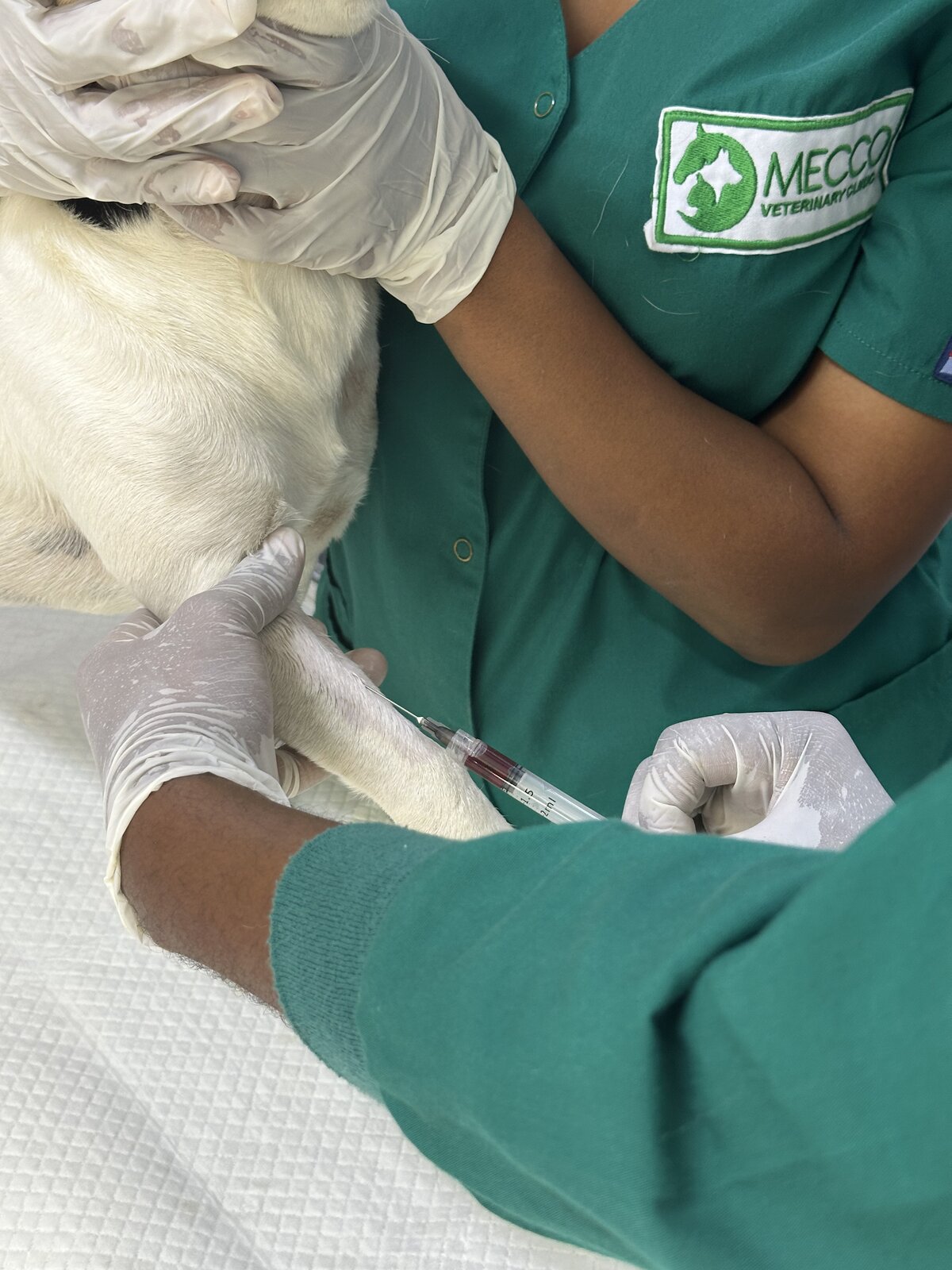
From sample to answer
Collection
Most samples are quick and well tolerated — a small blood draw, a urine sample, a skin swab or a stool sample. We use gentle handling and, where needed, local numbing to keep your pet comfortable.
Running the test
Many tests are run right here in the clinic, which means results often come back during the same visit. That speed matters most in emergencies and in patients who are unwell and cannot wait days for answers.
Interpretation
Results are read in the context of your pet’s examination and history, not in isolation. A value at the edge of the normal range may mean very little, while one only slightly abnormal may be significant — context is everything.
Discussion and plan
We explain what the results show and what they mean for your pet, in plain language, then agree on the next step.
Monitoring over time
For chronic conditions we repeat key tests at sensible intervals so we can see trends rather than single snapshots.
How to read a result — with us, not alone
Blood work is only as useful as the conversation around it. A single number rarely tells the whole story: age, breed, hydration, recent meals, stress and medication can all shift results. We will always interpret the tests alongside the physical examination and explain the reasoning, so the plan makes sense to you rather than sounding like a list of figures.
If a result is ambiguous, we will say so, and we may suggest repeating a test after a short interval. That is not indecision — it is good medicine.
Follow-up and honest limits
Where a test is not available in-house, we refer to trusted external laboratories and tell you the expected turnaround time. If a result will take longer than your pet can safely wait, we will treat on the best available information and adjust once the result arrives.
No laboratory can answer every question. Some conditions — certain cancers, hormonal disorders or inherited diseases — need advanced or specialist testing, and we will refer you rather than order a test we cannot interpret well ourselves.