
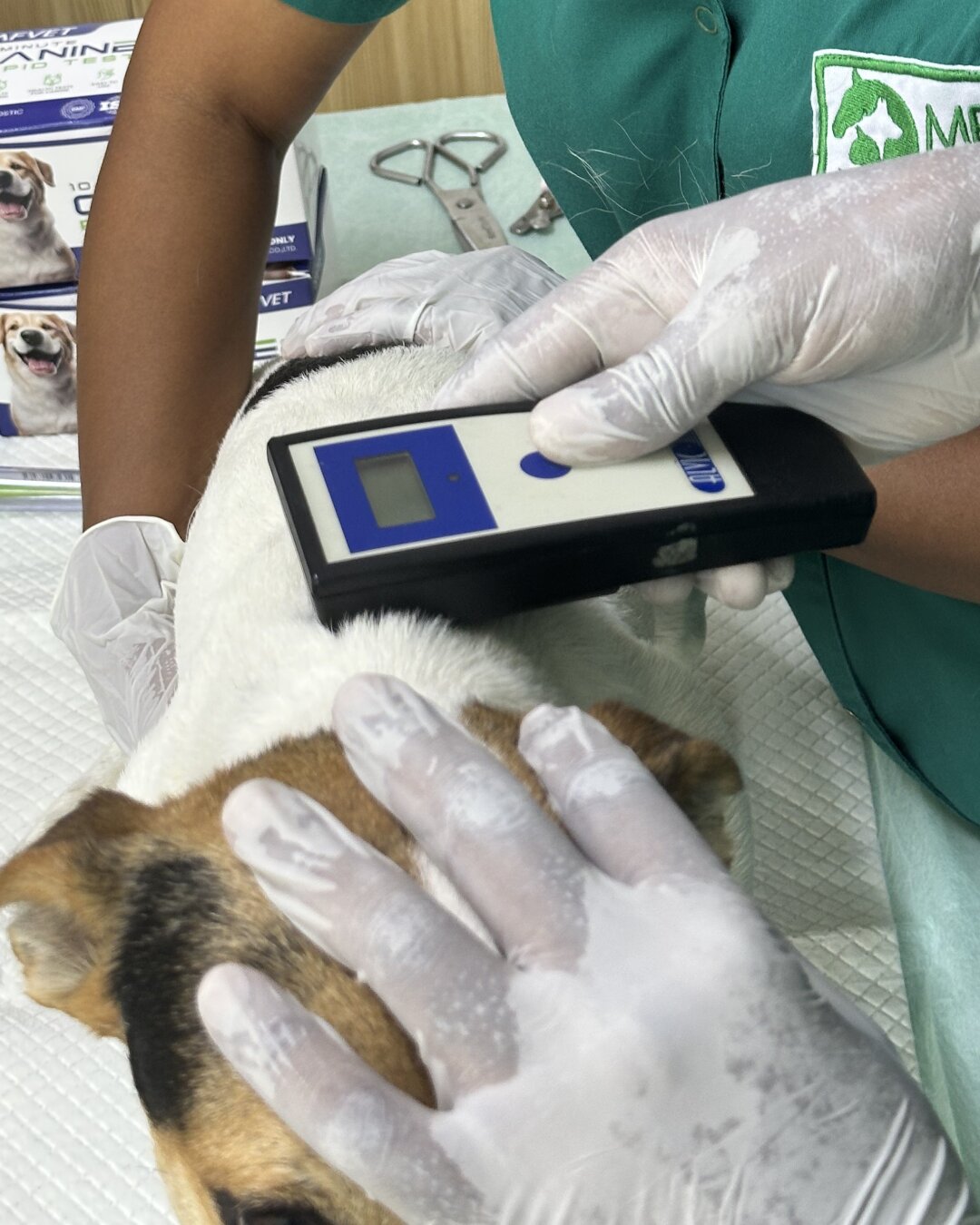
Identification that stays with your pet
A collar and tag can be lost, swapped or removed. A microchip is a small transponder, about the size of a grain of rice, placed under the skin between the shoulder blades. It carries a unique number that a scanner can read, giving your pet an identity that lasts for life.
If a lost pet is brought to a clinic, shelter or council office, a scan can link that pet back to a registered owner. The chip itself is only half the system — the registration is what turns a number into a way of reaching you.
What microchipping includes
- A scan to check whether your pet already has a chip
- Implantation of a sterile chip and a confirmation scan
- The chip number recorded in your pet’s clinical file
- Guidance on registering the chip and keeping your details current
- Help updating owner contact details if you move or change number
- Advice on what to do if a pet with a chip is lost or found
How microchipping works
Health check
Before implanting a chip we give your pet a brief examination to confirm they are well and that the procedure is appropriate.
Implantation
A small chip is placed under the skin between the shoulder blades, a bit like a routine injection. Most pets barely react, and no anaesthetic is needed.
Scan and confirm
We scan the chip to confirm it reads correctly, so you leave knowing it is working.
Registration
We record the chip number and explain how to register your contact details, so a found pet can be traced back to you.
Record-keeping
The chip number is added to your pet’s file, so it is available whenever your pet is seen at the clinic.
What a microchip can and cannot do
A microchip is permanent identification, but it is not a GPS tracker. It tells us who a pet belongs to, not where they are. It also cannot work unless the registered contact details are current, so please tell us if your phone number or address changes.
Microchipping is quick and low-risk. A small number of pets may have mild soreness at the site for a day or so. If you are unsure whether your pet is already chipped, we can scan them during any visit.