
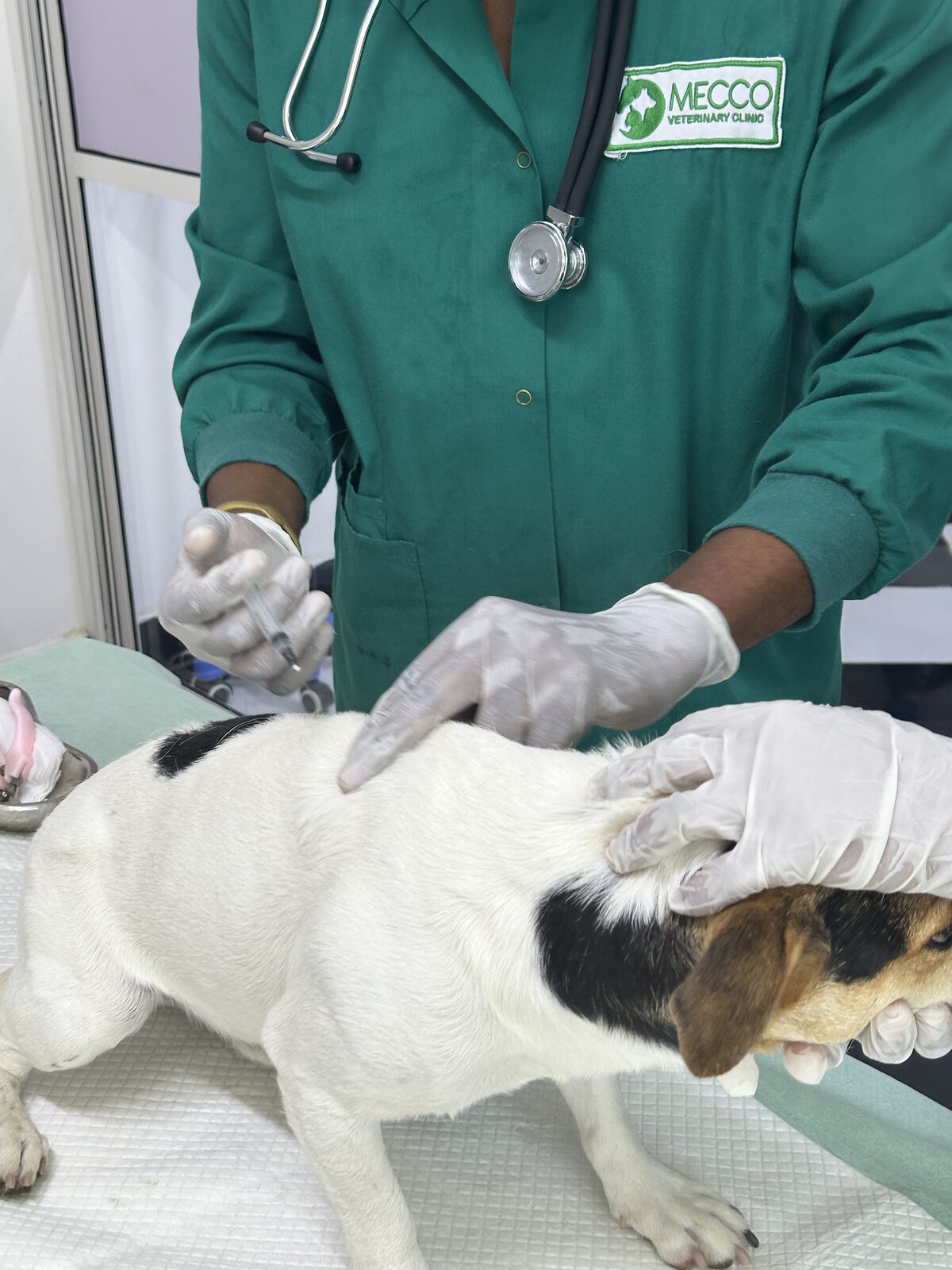
Why prevention matters more than treatment
Many of the most serious conditions we see are entirely preventable. Vaccines protect against diseases that can be fatal or cause lifelong damage, while regular deworming and parasite control protect your pet, your family and the animals they meet. In Tanzania’s warm climate, ticks, fleas and intestinal worms are a year-round concern rather than a seasonal one.
Preventive visits also give us a chance to catch problems early, when treatment is simpler, kinder and far less expensive. A five-minute weight check or a quick look at the teeth can reveal the beginning of a problem long before your pet shows any obvious sign at home.
How a vaccination course works
First visit and health check
Before any vaccine is given, we examine your pet to confirm they are well enough to be vaccinated. A vaccine given to an unwell animal may not work as intended, so this check is not a formality.
The first dose
Puppies and kittens receive their first vaccination once maternal antibodies have begun to fade. We record the vaccine name, batch and date in a written vaccination card that belongs to you.
The follow-up doses
A series of doses is spaced two to four weeks apart to build strong, lasting immunity. Each visit is also used to check growth, teeth, eyes and development.
The booster
A booster completes the primary course and confirms that protection has taken hold. From then on, adults need a booster according to the vaccine and your pet’s risk.
Staying on schedule
We keep your pet’s record and can prompt you when a vaccination or wellness check is approaching, so protection never lapses simply because a date slipped your mind.
Our preventive services
A preventive programme at Mecco can include:
- Puppy and kitten vaccination courses, timed to their developing immune system
- Rabies vaccination, recommended for every dog and cat
- Annual adult booster vaccination
- Routine deworming for intestinal worms
- Tick, flea and external parasite prevention
- Screening for common tick-borne diseases in this region
- Nutrition and weight guidance for every life stage
- Annual wellness examinations for adult and senior pets
- Dental checks and preventive oral-care advice
Parasites are a year-round job here
Because much of Tanzania stays warm for most of the year, parasites do not take a winter break. Ticks can transmit diseases such as ehrlichiosis and babesiosis; fleas cause itching, allergies and tapeworm; and intestinal worms can affect pets and, in some cases, the people who live with them.
We will advise a parasite-control routine that fits your pet — whether they sleep indoors, roam a compound, or travel with you. No single product suits every animal, so the plan is chosen after we know your pet’s age, weight and lifestyle.
A sensible schedule, adapted to your pet
As a general guide — always confirmed at your pet’s own examination — we aim to see:
- Puppies and kittens: a course of vaccines, plus deworming every two weeks until around twelve weeks of age
- Young adults: first booster, then annual vaccination and wellness checks
- Adults with outdoor or high-exposure lifestyles: more frequent parasite screening
- Senior pets: twice-yearly check-ups, since problems appear faster with age
- Any pet before boarding, licensing or a change of home: a health and vaccination review
Follow-up and realistic limits
Vaccination is highly effective but it is not a force field. No vaccine prevents every disease, and protection depends on completing the course on time. If a dose is delayed, we will tell you honestly whether it needs to be restarted or can simply be brought up to date.
Rarely, a pet may have a mild reaction — a little soreness, tiredness or a small swelling at the injection site — which usually settles within a day. Serious reactions are uncommon; if you are worried after any vaccine, call us rather than waiting.