
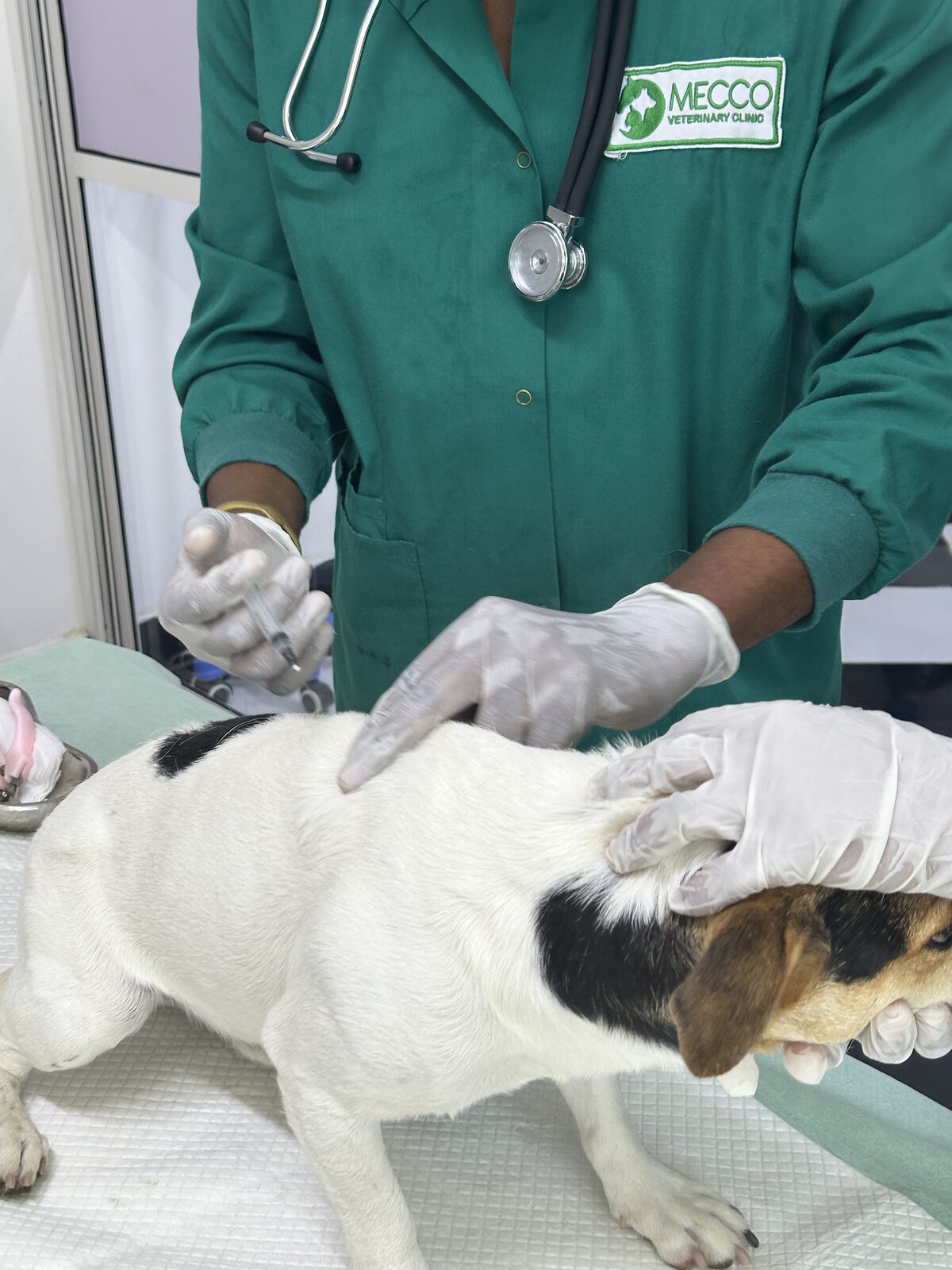
Why rabies is different from other diseases
Rabies is a viral infection of the nervous system. It is spread mainly through the saliva of an infected animal, usually by a bite. Once signs appear, rabies is almost always fatal — in animals and in people. There is no treatment that can save a pet at that stage.
That makes rabies unusual. For most diseases we can treat the patient after diagnosis; with rabies, prevention is everything. Vaccination protects your pet, reduces the risk to your family and helps protect the wider community.
Rabies is also a public-health issue, not only a pet issue. Every vaccinated dog or cat is a small barrier between wildlife and people.
How rabies spreads
The virus is carried in saliva and enters the body through a bite or a break in the skin. In Tanzania, dogs are the main source of human exposure, and unvaccinated dogs that roam or mix with other animals are at particular risk.
Wildlife such as bats, foxes and jackals can also carry rabies, but contact with unknown or unvaccinated dogs is the most common concern for pet owners. A bite does not need to be deep to transmit the virus.
Rabies cannot be diagnosed by looking at a dog. A friendly animal can still be infectious, and behaviour can change late in the disease. This is why vaccination records matter so much after any bite incident.
The vaccination schedule we follow
The exact timing depends on your pet’s age, previous vaccines and the product used. We record every dose.
- Puppies and kittens usually receive rabies as part of their first vaccination course, often from around twelve to sixteen weeks.
- A booster is given according to the product and your pet’s risk, commonly at around one year.
- Adult pets then continue boosters at the interval recommended for the vaccine used.
- Pets with an unknown vaccination history may need to restart or have a documented course.
- Licensing and boarding may require specific timing, certification and a microchip that matches the record.
If your pet is bitten or bites someone
Wash the wound immediately
Wash thoroughly with soap and running water for several minutes. This simple step reduces the risk of infection.
Control bleeding and cover the wound
Apply gentle pressure if needed and cover with a clean dressing. Do not seal a deep wound tightly without medical advice.
Seek medical advice for people
Anyone bitten or scratched should seek medical care promptly, even if the wound seems minor. Do not wait for symptoms.
Contact us about your pet
Tell us when and where it happened, whether the other animal is known and whether it is vaccinated. We will advise on examination, wound care and rabies risk.
Do not destroy or hide the other animal
If it is safe to do so, identify the animal and its owner. Vaccination status and observation can change the advice you receive.
Licensing, records and proof of vaccination
Rabies vaccination is often required for licensing and boarding. The certificate should match your pet’s microchip, and the vaccination history should be documented clearly.
Keep the original vaccination record in a safe place. If your pet was vaccinated elsewhere, bring that record so we can confirm the dates and product.
What to do next
Check your pet’s vaccination card today. If the rabies date is missing, overdue or unclear, book a consultation. We will review the history, vaccinate if appropriate and update your record.
If your pet has been in a fight or been bitten, call us immediately rather than watching for signs at home.