
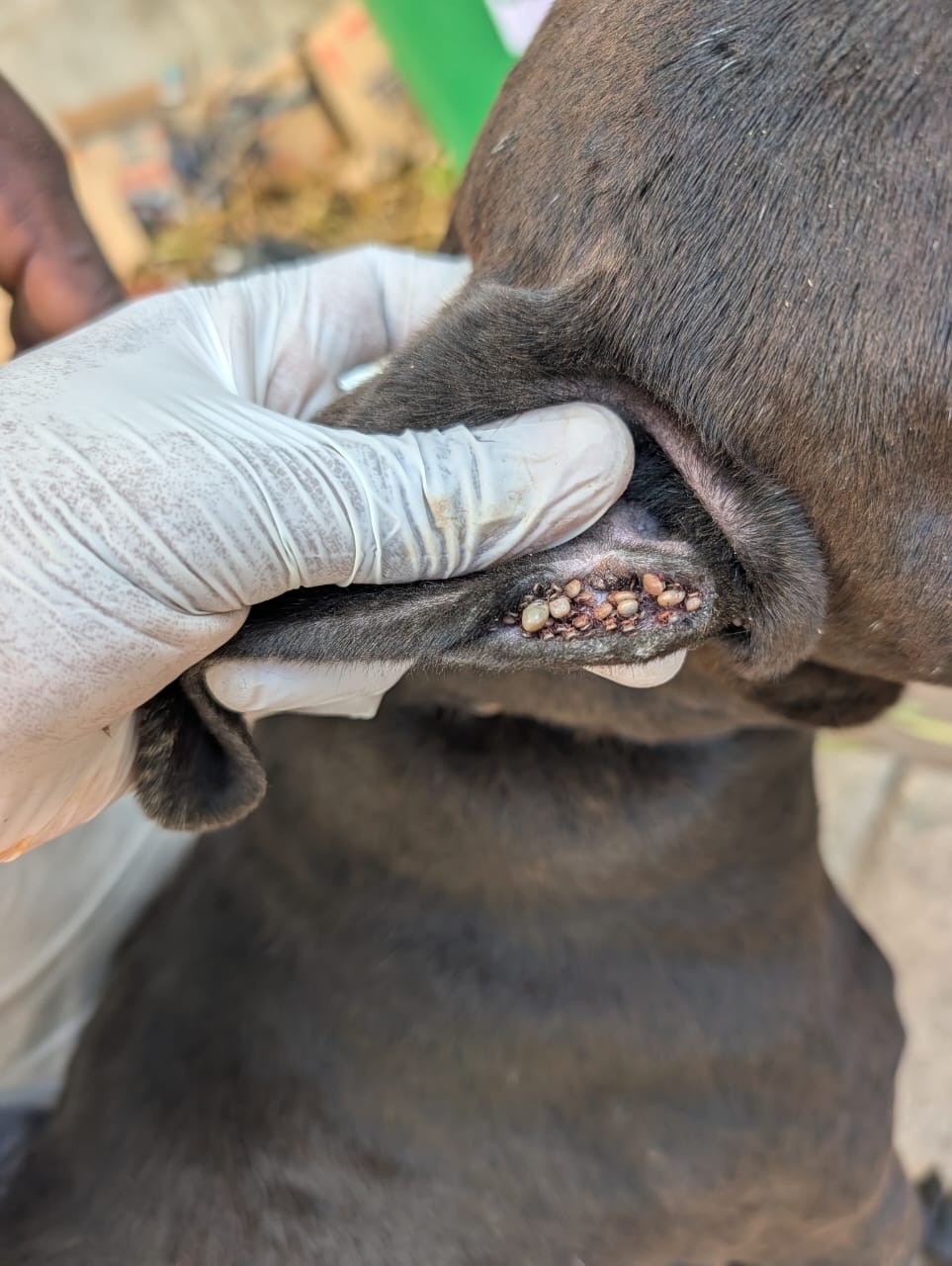
What “tick fever” actually means
Tick fever is a casual name for a group of tick-borne infections, not a single disease. In our region the most important are ehrlichiosis, babesiosis and anaplasmosis. Each is caused by a different organism, and each can make a dog seriously ill.
The early signs overlap, which is why owners often describe a dog that is simply “not right”. A dog may be quiet, off its food, reluctant to walk or warm to the touch. Because these signs are vague, tick fever is easily mistaken for tiredness or a minor bug.
The key point is that ticks in Tanzania are active for most of the year. A dog does not need to be covered in ticks to be infected — a single bite is enough.
Symptoms to take seriously
Contact us if you notice any of these, especially in a dog that has had ticks or lives in a tick-heavy area.
- Lethargy, weakness or a sudden drop in energy.
- Fever, shivering or panting without obvious cause.
- Reduced appetite, weight loss or vomiting.
- Pale gums, inner eyelids or tongue.
- Bruising, nosebleeds or blood in the urine or stool.
- Dark, tea-coloured urine or yellow gums and eyes.
- Stiffness, reluctance to move or swelling of the legs.
- In severe cases, collapse, breathing difficulty or seizures.
Why early testing matters
Tick-borne infections can cause anaemia, bleeding problems, organ damage and, in some cases, chronic disease that flares months later. The earlier we identify the infection, the simpler and more effective treatment usually is.
We combine the history with a physical examination and blood testing. A blood count can show anaemia or low platelets, and specific tests can identify the organism involved. Sometimes further tests are needed if the picture is unclear or your dog does not respond as expected.
Do not wait for pale gums or bleeding before seeking help. Those are signs of advanced disease, not the first warning.
If you suspect tick fever
Call the clinic
Describe what you have noticed, when it started and whether you have found ticks. We will advise whether your dog should be seen urgently.
Do not start leftover medicine
Antibiotics or pain relief from a previous illness may not be appropriate and can complicate diagnosis. Bring any medication your dog is already taking.
Note the tick exposure
Tell us where your dog walks, whether other pets are affected and when you last used tick prevention. This helps us interpret the tests.
Bring your dog in promptly
Blood testing and treatment can begin at the clinic. If your dog is weak, pale or struggling to breathe, call ahead so we can prepare.
Treatment and recovery
Treatment depends on the infection. Some tick-borne diseases respond to specific medication, while others need supportive care such as fluids, blood support or hospitalisation. Your dog may also need treatment for the ticks themselves and for any secondary problems.
Recovery is not always instant. Some dogs improve within days, while others need weeks and follow-up blood tests. Chronic cases may need longer monitoring. We will explain what to expect for your dog rather than giving a single timeline for every patient.
Prevention is far safer than treatment
Use a veterinary-recommended tick product at the correct interval, all year round. Check the coat after walks, particularly around the ears, neck, armpits and toes. Treat every dog in the home, and use only cat-safe products on cats.
If you have struggled with ticks despite using a product, book a consultation. Resistance, incorrect application, bathing routines and product choice all matter, and a plan tailored to your dog is more reliable than guessing.